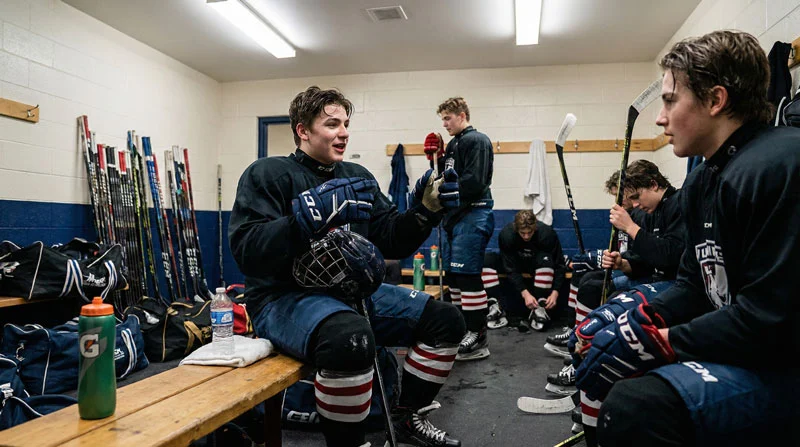
Every hockey team is filled with talented players, yet the athletes who consistently earn trust, opportunity, and advancement are often those who bring more than just ability to the ice. Being a great teammate and demonstrating leadership are qualities that separate good players from impactful ones.
The Foundation of Trust
Great teammates understand that hockey is a team game at its purest. They show up prepared, compete honestly, and put the group ahead of themselves. Whether it's blocking a shot, finishing a backcheck, or supporting a teammate after a tough shift, these actions build trust within the locker room. Coaches notice players they can rely on—especially in high-pressure situations—and when trust is earned, it often leads to opportunity.
Leading By Example
Leadership doesn't require a letter on your jersey. Some of the most effective leaders lead by example. They work hard in practice, maintain a positive attitude, and hold themselves accountable before holding others accountable. These players set the standard without saying a word. When younger teammates see consistency and professionalism, they naturally follow.
Communication and Adversity
Communication is another hallmark of strong leadership. Great teammates communicate on and off the ice—encouraging, directing, and supporting those around them. Leadership shows up in moments of adversity, not just in moments of success. How a player responds after a loss, a bad game, or reduced ice time reveals far more than how they act when things are going well.
Elevating Those Around You
Coaches and scouts value players who elevate those around them. A skilled player who disrupts the locker room or puts personal success ahead of team goals quickly loses favor. On the other hand, a player who may not lead the team in scoring but brings consistency, work ethic, and accountability often earns respect and longevity. Teams are built around players others want to play with.
Beyond the Rink
Leadership also extends beyond the rink. Being punctual, respectful, and professional in all environments reflects maturity and readiness for higher levels. These qualities signal to coaches and decision-makers that a player can be trusted with responsibility. As players progress through junior hockey, college, and beyond, trust becomes currency.
Building Team Culture
For younger players, especially, learning to be a great teammate accelerates development. It fosters a positive environment where players can grow, learn from mistakes, and push one another to improve. Strong team culture doesn't happen by accident—it's built by individuals who choose to lead through action and attitude every day.
Leadership Is About Impact
Ultimately, leadership is about impact. It's about leaving your team better than you found it. Players who commit to being great teammates build reputations that follow them throughout their careers. Those reputations open doors, create opportunity, and earn respect at every level of the game.
In a sport defined by competition, leadership is a differentiator. Be the player coaches trust, teammates respect, and opponents have to deal with. Talent may get you in the door—but leadership keeps you there.